 |
||||||||||






 |
||||||||||
 |
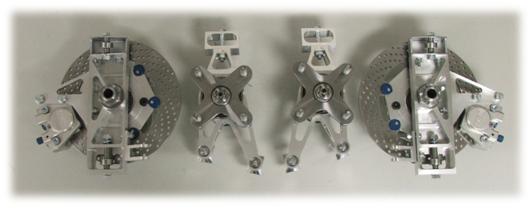
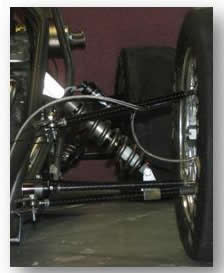
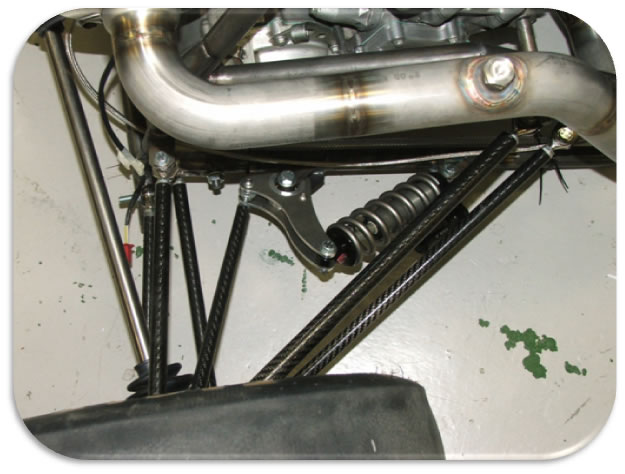
The suspension system is a typical unequal length double wishbone link system with anti-pitch characteristics. The front spring damper is mounted directly between the chassis and the lower wishbone and the rear spring damper uses a pull rod and rocker arm arrangement. Suspension kinematics were analysed using Lotus Engineering Software, LESoft. To reduce mass, steel wishbones have been replaced with carbon fibre tubes bonded to a steel or aluminium apex. Tie/track rods and rear pull rods have been made with the same mandrel wound carbon fibre tubes for the same reason. Shock absorber used for the front suspension was a Manitou Evolver ISX1 and for the Rear FOX Float R shocks were used. The air spring damper offers an 860g weight saving for the front suspension alone and about 896kg for the rear suspension.
|
v | ||||||||
 |
||||||||||
| Developed by Umer Saleem | Powered by Crystal Tech
|